Accident Benefits & Dispute Resolution

Practical resolutions, built on thirty years inside the system.

Chris Jackson provides strategic advisory, accident benefits expertise, and alternative dispute resolution services to lawyers, insurers, and rehabilitation professionals across Ontario.

Christopher Jackson Consulting mark

Accident Benefits Expertise

Deep, practitioner-level knowledge of Ontario's statutory accident benefits system, from catastrophic impairment to tribunal practice.

Every Seat at the Table

Experience as rehabilitation consultant, insurer, legal professional, and practice manager — a rare, all-sided view of every dispute.

Trained in Resolution

Formal education in mediation, negotiation, and ADR theory paired with hundreds of real mediations and settlement negotiations.

Navigating complex disputes shouldn't feel adversarial.

Chris helps organizations and professionals find clarity, integrity, and practical, cost-effective resolution — even in the most complicated accident benefits matters.

View Services

About

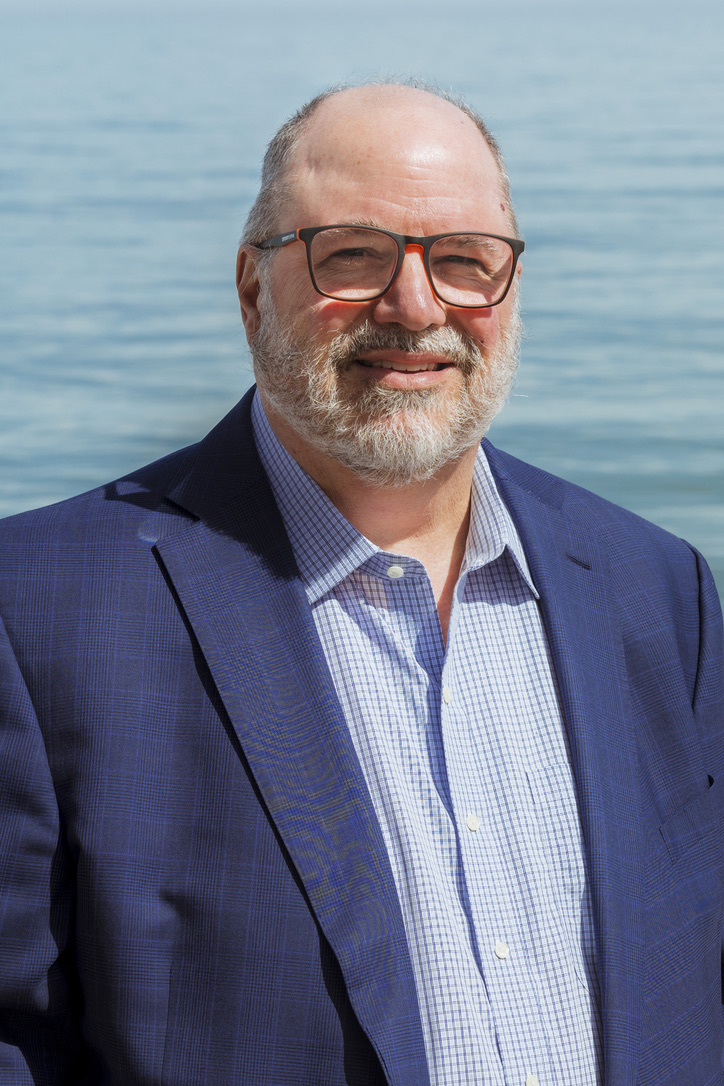
Christopher Jackson

Chris Jackson is a strategic advisor, accident benefits specialist, and alternative dispute resolution professional with more than 30 years of experience helping lawyers, insurers, rehabilitation professionals, and organizations resolve complex disputes with practical, informed, and cost-effective solutions.

Throughout his career, Chris has worked from virtually every perspective within Ontario's accident benefits system — as a rehabilitation consultant, insurer, legal professional, and manager of one of Ontario's leading plaintiff-side accident benefits practices. This breadth of experience lets him identify practical pathways to resolution while appreciating the legal, medical, financial, and human dimensions of every dispute.

Most recently, Chris served as Accident Benefits Manager at Smitiuch Injury Law, managing complex accident benefits litigation, developing case strategy, coordinating tribunal proceedings, and supporting counsel through the dispute resolution process. Earlier in his career he held senior leadership roles in rehabilitation consulting, disability management, and insurance claims — giving him a rare understanding of the interests and challenges facing every participant in the claims process. His expertise spans catastrophic impairment claims, vocational rehabilitation, future care cost analysis, disability management, statutory accident benefits, and administrative tribunal practice.

A defining feature of Chris's career has been his commitment to effective dispute resolution. He has participated in and coordinated hundreds of mediations, settlement negotiations, and administrative proceedings, representing both insurers and injured persons through Ontario's evolving accident benefits system. His approach emphasizes careful preparation, principled negotiation, and practical solutions that help parties resolve disputes efficiently and constructively.

Chris has complemented this practical experience with formal education in alternative dispute resolution, completing advanced studies in collaborative conflict resolution, negotiation, mediation processes, and ADR theory — allowing him to approach disputes with strategic insight, objectivity, and a focus on meaningful resolution.

A respected educator and thought leader, Chris is a frequent speaker and panelist for the Ontario Trial Lawyers Association, and was invited to participate in the Canadian Forum on Civil Justice roundtable examining the Licence Appeal Tribunal. He regularly presents on accident benefits strategy, tribunal advocacy, legislative developments, catastrophic impairment, and best practices for practitioners.

Today, Chris draws on the knowledge gained throughout his career to provide strategic advice, independent consulting and mentoring, education, and dispute resolution services — helping organizations and professionals navigate complex issues with clarity, integrity, and practical judgment.

EducationMaster of Divinity & Bachelor of Arts in Philosophy
AwardOntario Trial Lawyers Association — Outstanding Law Clerk Award
ServiceCanadian Forces Decoration (CD) — 12 years, Canadian Armed Forces Reserve
Services

How Chris Can Help

Strategic Advisory

Independent, practical advice on complex accident benefits files — from early case strategy to resolution planning for lawyers, insurers, and rehabilitation organizations.

Accident Benefits Consulting

Hands-on expertise in statutory accident benefits, catastrophic impairment claims, vocational rehabilitation, and future care cost analysis.

Alternative Dispute Resolution

Mediation support, settlement negotiation, and administrative tribunal preparation grounded in formal ADR training and hundreds of real proceedings.

Case Strategy & Tribunal Support

Coordination of tribunal proceedings and litigation support, helping counsel build clear, well-prepared positions for the Licence Appeal Tribunal and related forums.

Independent Mentoring & Education

One-on-one mentoring and speaking engagements on accident benefits strategy, tribunal advocacy, legislative developments, and best practices for practitioners.

In Practice

What This Looks Like

  • Ensuring that all benefits are being claimed and are utilized effectively
  • File review for possible catastrophic impairment designation
  • Drafting correspondence to insurers regarding section 44 insurer's examinations and other unreasonable requests
  • Holding insurer's "feet to the fire" with respect to their obligations under the SABS
  • Providing valuation for claims in preparation for mediation or settlement
  • Drafting AB sections of mediation memoranda, providing strategic advice for offers and "bottom line"
  • Strategic advice for tribunal hearing preparation
  • Drafting settlement proposals
  • Assessing market value of past attendant care to be claimed in tort matters
  • Advising on AB priority matters and examinations under oath
  • Developing accident benefits best practices, including precedents and capturing limitations
  • Training staff and mentoring on accident benefits
  • Advising on the "right fit" rehabilitation professionals

Not sure which service fits your situation? Reach out and Chris will help you figure out the right path.

Get In Touch

Case Law

Cases Chris Has Assisted On

The following are some of the decisions Chris has contributed to over the course of his career, each of which has helped advance the rights of motor vehicle accident victims in Ontario.

Marilena DiMarco was riding her bicycle on a sidewalk to avoid a street fair when she swerved around a parked van, lost her balance, and fell, fracturing her hip. Her insurer, Chubb, denied benefits on the basis that the incident did not qualify as an "accident" under the SABS. The arbitrator disagreed, finding that the parked van directly caused the fall and that DiMarco was therefore entitled to accident benefits. The decision affirmed that incidents involving stationary motor vehicles can still satisfy the definition of an "accident," protecting the rights of cyclists and pedestrians injured in similar circumstances.
The client was denied ongoing non-earner benefits but was never provided with a letter denying the benefit, thereby eradicating any limitations defence by the insurer.
Andrew Botbyl and Tracey Yaromich were catastrophically injured in a motorcycle accident, sustaining traumatic brain injuries and serious orthopedic fractures. They had purchased optional enhanced accident benefits through Heartland but, acting on inadequate guidance from both insurers, mistakenly submitted their claim to Economical. When they sought to correct the error, Heartland refused to allow a fresh application, effectively denying them access to the enhanced benefits they had paid for. The Divisional Court held that the Licence Appeal Tribunal has the authority to grant relief from forfeiture under section 129 of the Insurance Act, allowing the claimants to re-apply to Heartland. The decision was a landmark consumer protection ruling, affirming that innocent procedural mistakes should not strip injured victims of coverage they purchased, and that Ontario's accident benefits scheme must be interpreted in a manner that reduces hardship rather than trapping claimants in technical pitfalls.
Michael Beaudin was rendered a paraplegic after a catastrophic incident at a sanctioned motocross competition. His insurer, Travelers, denied him access to accident benefits by arguing that his dirt bike was not an "automobile" under the Insurance Act and that the SABS therefore did not apply. Starting at the LAT and ultimately reaching the Ontario Court of Appeal — which dismissed Travelers' appeal — the case established that off-road vehicles used at closed-course competitions sponsored by a motorcycle association satisfy the definition of "automobile" and that those injured in such circumstances are entitled to the full protection of the SABS. Travelers was subsequently denied leave to appeal by the Supreme Court of Canada, cementing the decision as binding precedent and ensuring that catastrophically injured riders at sanctioned events cannot be left without accident benefits.
An application for a non-earner benefit was denied by the insurer due to a disability certificate not being filed for well after 2 years from the date of the accident. The Tribunal found that the insurer knew the circumstances regarding the loss but did not fulfil their duties to advise their insured on how to claim this benefit.
A self-employed taxi driver was injured in a 2016 motor vehicle accident and subsequently denied both income replacement benefits and funding for physiotherapy by his insurer, Aviva. The LAT found that the applicant suffered a substantial inability to perform the essential tasks of his self-employment and was therefore entitled to income replacement benefits, as well as the disputed physiotherapy treatment plan. The Tribunal also awarded a special award against Aviva, finding that the insurer had unreasonably withheld payment. The decision reinforced the rights of self-employed accident victims to access income replacement benefits on equal footing with salaried workers and demonstrated that insurers face meaningful consequences for unjustified denials.
Samantha Batuzskin was denied income replacement benefits, attendant care benefits, housekeeping and home maintenance benefits, and rehabilitation treatment by TD Insurance following her motor vehicle accident. The arbitrator found in her favour, ordering TD to pay the full range of denied benefits. When TD then refused to pay her arbitration hearing expenses, a further order was obtained requiring TD to cover those costs as well. The case demonstrated that insurers cannot avoid their obligations under the SABS by denying a broad array of benefits simultaneously, and that claimants are entitled to have their reasonable litigation expenses covered when an insurer acts unreasonably. This decision confirmed that an Employer's Confirmation Form (OCF-2) is not required if the insured is self-employed at the time of the accident.
The client, who was catastrophically impaired, was found to be entitled to non-earner benefits, housekeeping and home maintenance benefits, attendant care benefits, as well as interest on these denials by the insurer.
Dale Cox fell from his bicycle and sustained a catastrophic traumatic brain injury. He recalled being sideswiped by an unidentified white vehicle, but no witnesses came forward, police were not called, and the only physical evidence — his damaged bicycle — was later discarded. Aviva took the position that the incident was not an "accident" under the SABS. The arbitrator found in favour of Mr. Cox, accepting his account and concluding that the circumstances satisfied the statutory definition of an accident. The decision established an important principle: that the absence of witnesses, police reports, or physical evidence does not automatically bar a claimant from recovering accident benefits, and that a credible account of events, assessed on a balance of probabilities, can be sufficient.
Janice Little had received multiple denials from her insurer, Pembridge, and sought to dispute them through the FSCO arbitration process. Just prior to the arbitration hearing, Pembridge raised a series of preliminary objections in an effort to block Ms. Little from proceeding. The arbitrator rejected each of Pembridge's preliminary arguments and confirmed that Ms. Little was entitled to proceed to a full arbitration hearing on the merits of her claims. The decision was an important affirmation that injured persons cannot be denied access to the dispute resolution process through procedural maneuvering by their insurer.
This case involves the spouse of an insured who wasn't directly involved in the accident but suffered psychological harm as a result of his spouse's injuries. Once he became aware of this, he applied for accident benefits but was denied due to the lateness of the application. The Tribunal granted him leave to claim accident benefits, as it accepted this as a reasonable excuse for the delay.

Testimonials

What Others Say

I have had the pleasure of working with Chris Jackson on numerous accident benefits disputes before tribunals and the courts, and I am pleased to recommend his services. Chris is highly professional, exceptionally well prepared, and steadfast in his commitment to achieving the best possible outcomes for his clients. His extensive knowledge of accident benefits legislation, the applicable rules, and evolving case law consistently distinguishes him. He has assisted me on significant matters, including Beaudin v. Travelers and Botbyl v. Heartland Farm Mutual, and his contributions were invaluable in both cases. Chris’s work has been instrumental in several landmark decisions that have advanced the rights of victims of motor vehicle accidents.

It has always been a pleasure to collaborate with him, and I highly recommend his services to anyone seeking outstanding assistance with their accident benefits files.

Peter Cho, Partner

I’ve known Chris for years through OTLA, and honestly, he’s one of those people you just want on your side. Sharp, professional and, somehow, he always has time to help, even when he’s clearly slammed. Chris has the kind of experience and practical instincts that only come from doing this work for a long time; not just reading about it. Whether it’s at a conference, a committee meeting, or just catching up between sessions, he’s always generous with his insight and genuinely invested in helping other law clerks do better work.

I’m happy Chris has started a consulting business, because now more people get to benefit from that experience and knowledge. Chris is who you need to consult with if you’re a lawyer, law clerk, paralegal or a firm looking for someone experienced, practical, and easy to trust.

Tania Harris, Law Clerk

I was fortunate to work with and learn from Chris Jackson for several years in his role as our firm’s Accident Benefits Manager. His exceptional knowledge of Ontario’s accident benefits system and case law, strategic insight and practical approach made him an invaluable resource to our lawyers, staff and clients. Just as importantly, Chris is a genuinely kind and highly respected professional with a great sense of humour, who is an absolute pleasure to work with. I would not hesitate to recommend Chris to any firm or organization seeking trusted and experienced accident benefits guidance.

Megan Johnston, Lawyer

Contact

Start a Conversation

Let's discuss your file

Whether you need strategic advice on a complex accident benefits matter, support preparing for mediation, or an expert opinion, Chris is happy to discuss how he can help.

Based In Ontario, Canada
Focus Accident Benefits & Dispute Resolution